Smartphones for Data Collection

Smart phones data collection improves primary education quality advocacy and return to HIV treatment in the North of Mozambique

Under the LCD, two local organizations in the North of Mozambique benefited from technical assistance to improve the data collection of their field work.

Organization A advocates for better primary education in North of Mozambique. It helps school management committees to improve the school management and quality of primary education. Organization B supports rural and suburban communities in the establishment of Community Savings and Loan Groups, strengthening communities in the organization, management, collection of savings, granting of small loans and social assistance to the members of the group.

This story (problem, intervention and results) is on the use of smartphones for better data collection, analysis and action.
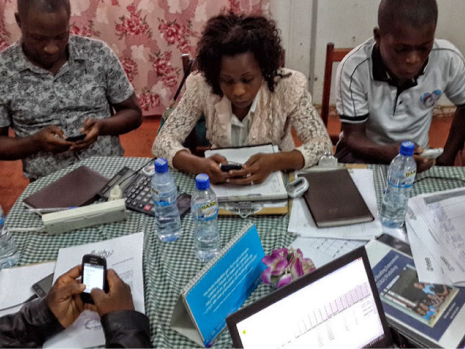
Smartphones data collection

The problem

Organization A produces information to advocate for better quality in primary education in 5 districts in the North of Mozambique. Organization B identifies and actively searches for HIV patients that gave up HIV treatment.

For these Organizations, data was being collected using paper forms. Data collection, analysis and information production would take on average one month: activists used to collect data by filling paper forms, keep the forms with them and once a month travel to the Organization's Offices to deliver the filled forms.

These forms would then be entered into rudimentary Excel spreadsheets.

Therefore, these Organizations were lacking quick access to updated information. The probability of mistakes was high due to the 2 data entry moments (filling paper forms; data entering into an excel spreadsheet) with a lag of time of, at least, one month.

The intervention

Through the LCD initiative Organizations A and B introduced a smart phone based data collection systems. The technology allowed for data to be collected through smart phones or tablets. Once data is entered, it is uploaded (as soon as internet access is available) to a secure cloud server and can be visualized in real time on a computer anywhere in the world.

The technical assistance team worked with these two Organizations to: a) revise the tools for data collection; b) design forms for smart phone use;

c) install the App on headquarter desktops and on activists' smart phones; d) train activists to use the smart phones for data collection; e) train the administrator to monitor the data and use the platform; f) pre-test the technology; g) accompany the first data collection exercises; h) support / on-the-job training in using the resulting database to produce relevant information.

The results

The local primary schools can now make decisions based on more up to date and accurate information. The HIV patients that gave up HIV treatment are better tracked, including with GPS data. These allows a better follow up of the reference services provided by the Organization B.

Angelo de Sousa, project manager at Organization A, acknowledges the importance of the smart phones data collection: “Now we can have more consistent data. The GPS allows us to confirm where the data was collected and at what time. Now we have access to the information in real time. We don’t have to wait until the next month to have access to the filled forms. Now we have better evidences and structured information to influence the schools committees,

the local government and the Provincial Directorate of Education to make better decisions for our schools”.

The activists do not have to keep the paper forms with them for one month and thereafter travel to the Organization office to deliver them (with the risk of losing information in the process).

The system saves their time, provides more accurate information and hopefully will contribute to improve the quality of education and improve the return to HIV treatment for the HIV patients in Nampula Province.